- Expert Consensus on Multidisciplinary Diagnosis and Treatment of Gastroparesis in China (2025, Beijing)
- Chen Qianqian, Yuan Yaoqian, Li Wangting, Lv Kunming, Wang Yingwei, Jiang Wenli, Guo Feng, Ye Ting, Zhang Xinsheng, Pang Jichao, Ning Bo, Shao Qun, Li Yi, Lyu Zhaohui, Liu Yinghua, Liang Yingkui, Wang Ruimin, Luo Yukun, Linghu Enqiang
- 2026, 10 (1): 1-19. DOI:10.26599/AUDT.2026.250055
- Abstract ( 56 ) HTML ( 4 ) PDF ( 836KB ) ( 592 )
-
Gastroparesis (GP) is a gastric motility disorder characterized by delayed gastric emptying in the absence of mechanical obstruction. This expert consensus covers aspects of GP etiology (diabetes, surgery, drug-induced, idiopathic, scleroderma, etc.), symptomatology, diagnosis (scintigraphic imaging, ultrasound contrast meal assessment, and radiopaque marker gastric motility testing), and treatment (pharmacological therapy, nutritional support, traditional Chinese medicine, and interventions targeting the pylorus, such as endoscopic surgery and surgical procedures). GP significantly impacts patients' psychological well-being and quality of life, potentially leading to psychological disorders such as anxiety and depression, and also imposes a heavy economic burden on patients and society. Therefore, this expert consensus advocates for the establishment of a multidisciplinary team diagnosis and treatment model, which will further standardize and optimize the diagnosis and treatment process of GP in our country and is crucial for improving patients' therapeutic outcomes and quality of life.
- The Role of Sonazoid-contrast-enhanced Ultrasound In Precision Diagnosis and Guidance for Radiofrequency Ablation Therapy of Hepatocellular Carcinoma: a Literature Review
- Liu Taixia, Wang Hanxiang, Wang Dan, Zhang Yuke, Guo Yunyun, Liu Shuo, Zhang Minfeng, Nie Hongming, Shen Rui
- 2026, 10 (1): 20-28. DOI:10.26599/AUDT.2026.250084
- Abstract ( 38 ) HTML ( 1 ) PDF ( 3329KB ) ( 590 )
-
Hepatocellular carcinoma (HCC), constituting 75-85% of primary liver cancer cases, ranks as the third leading cause of global cancer-related mortality. The early diagnosis of HCC is critical for determining optimal clinical therapeutic strategies. Radiofrequency ablation (RFA) has emerged as a preferred for managing early-stage HCC cases, primarily due to its less invasive nature, simplicity and safety. Advanced imaging for pre-operative evaluation of HCC has been increasingly used. Contrast-enhanced ultrasound (CEUS) has improved the clinical application of ultrasound (US) in HCC. It also provide more accurate informations for guiding RFA procedures. In the future, CEUS, through its convergence with emerging artificial intelligence (AI)-driven technologies, will play an even greater role in HCC management. This systematic review evaluates the utility of Sonazoid-enhanced contrast ultrasound (Sonazoid-CEUS), particularly its unique Kupffer phase imaging, in improving HCC diagnostic and optimizing RFA precision via real-time monitoring capabilities and prolonged imaging windows (up to 60 minutes).
- Advances in Breast Ultrasound Segmentation and Classification
- Fu Lijia, Li Na, Liao Ziling, Lin Yanping, Li Zhaojun, Li Fan
- 2026, 10 (1): 29-41. DOI:10.26599/AUDT.2026.250056
- Abstract ( 34 ) HTML ( 2 ) PDF ( 2224KB ) ( 585 )
-
Breast cancer is one of the most prevalent cancers affecting women worldwide. Ultrasound is extensively utilized for clinical screening and diagnosis due to its affordability, absence of radiation, and rapid imaging capability. To enhance diagnostic accuracy, computer-aided diagnosis (CAD) systems have been developed, with segmentation and classification being key techniques. This review systematically examines 62 recent studies on breast ultrasound segmentation and classification, covering various imaging techniques such as B-mode, elastography, 3D ultrasound, contrast-enhanced ultrasound (CEUS), and color Doppler. specifically, we detail the challenges and deep-learning-based methods associated with these modalities. Comparative analysis reveals that current deep learning approaches typically achieve Dice coefficients ranging from 0.79 to 0.91 for segmentation and classification accuracies exceeding 88.2% in multimodal settings. Finally, this article identifies critical research gaps, including data scarcity and model interpretability, and discusses future directions such as multimodal fusion and explainable AI (XAI) to further improve clinical applicability.
- Advances in the Application of Ultrasound for Evaluating Placental Function in Fetal Growth Restriction (FGR) Pregnancy
- Shi Ming-Li, Liu Guo-Hui, Bao Fu-Xing
- 2026, 10 (1): 42-50. DOI:10.26599/AUDT.2026.250064
- Abstract ( 41 ) HTML ( 1 ) PDF ( 1512KB ) ( 586 )
-
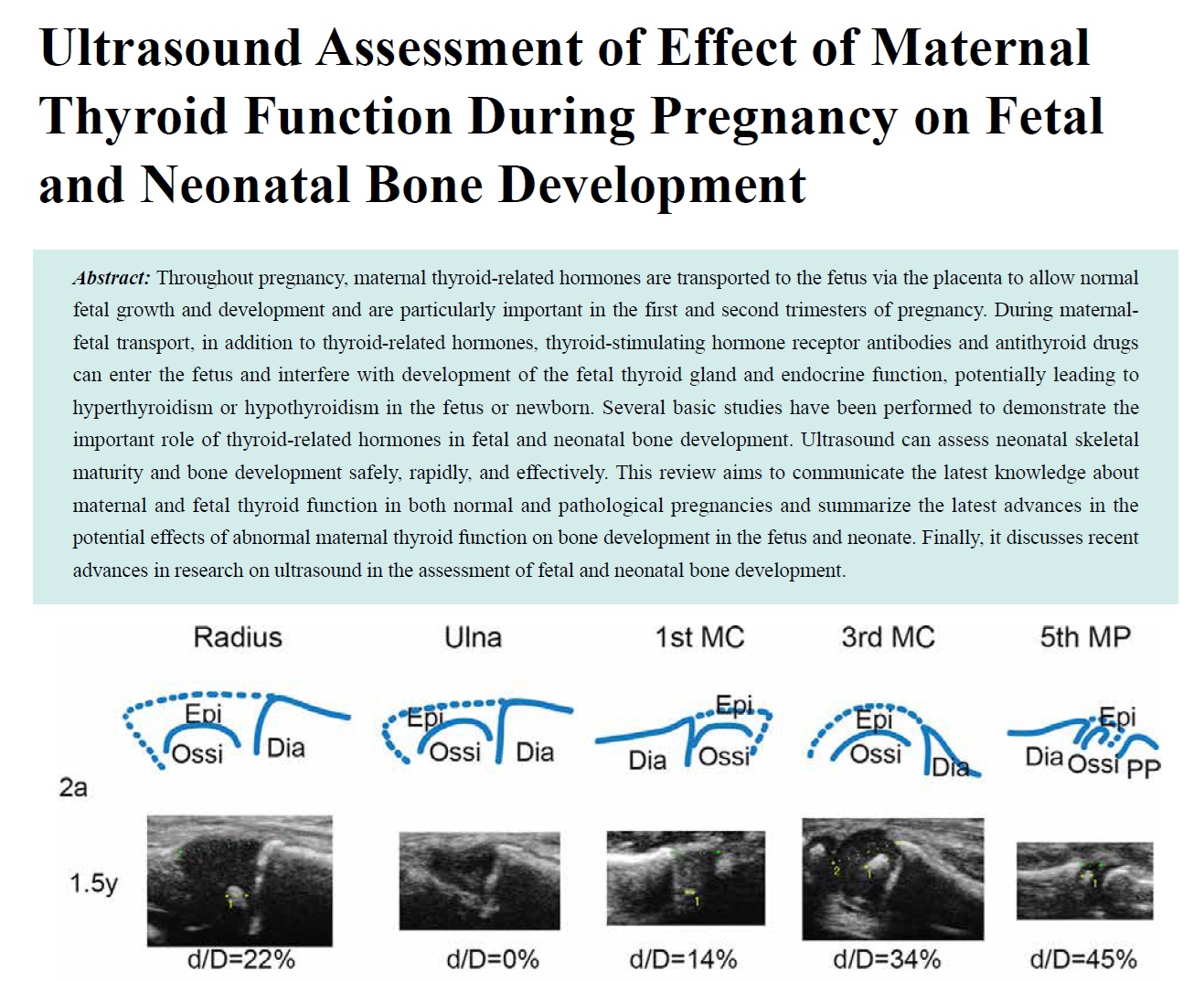
Placenta is a vital organ of a unique circulatory system that allows the exchange of nutrients between maternal and fetal circulations, supporting fetal growth during pregnancy. The placental nutrient transfer capacity is precisely modulated by the signals originating from the fetus, mother, and placenta itself, thereby ensuring appropriate regulation of fetal growth. However, the abnormality of any link in this process may lead to the failure of the regulation, and thus the placenta can no longer meet the fetal demand, causing fetal growth restriction (FGR). This review investigates the morphological and functional alterations in the regulation of placental growth and development, as well as the uteroplacental circulation in human pregnancies complicated by FGR. Additionally, it discusses the ultrasound application in the assessment of placental insufficiency.
- Focused Ultrasound Combined with Microbubbles for Inducing Blood-Brain Barrier Opening: Cavitation Monitoring and Control
- Li Na, Li Fan
- 2026, 10 (1): 51-58. DOI:10.26599/AUDT.2026.250050
- Abstract ( 42 ) HTML ( 1 ) PDF ( 498KB ) ( 572 )
-
Focused ultrasound (FUS) represents an emerging non-invasive technique capable of achieving reversible and targeted opening of the blood-brain barrier (BBB) when combined with microbubbles (MBs), significantly enhancing drug permeability. This technology demonstrates considerable potential in preclinical studies for diagnosing and treating neurological disorders. Ensuring safe and effective BBB opening while preventing tissue injuries such as red blood cell extravasation remains a critical translational challenge. This review examines the mechanisms of FUS combined with MBs induced BBB opening, key influencing factors, and recent advances in strategies for monitoring and controlling in vivo cavitation activity, providing foundational insights for future research.
- From Non-Mass Stage to Complex Type: Ultrasonographic Assessment of Granulomatous Lobular Mastitis Across Six Clinical Stages
- Yin Yulian, Cheng Yifan, Zhou Liangmei, Zhong Yuanyuan, Wang Bing, Wu Jingjing, Ren Yajuan, Gao Dongwen, Chen Hongfeng, Ye Meina, Yin Haoqiang
- 2026, 10 (1): 59-68. DOI:10.26599/AUDT.2026.250053
- Abstract ( 37 ) HTML ( 3 ) PDF ( 1953KB ) ( 585 )
-
Objective
This study aims to summarize and validate the ultrasonographic features of granulomatous lobular mastitis (GLM) across its various clinical stages.
MethodsWe have summarized and defined a set of disease-specific ultrasonographic features, including five subtypes of the “track sign,” as well as the “donut sign,” “false burr sign,” abscess formation, ulceration, and fistulous tracts. According to disease progression, GLM was categorized into six stages: Non-Mass Stage, Mass Stage, Abscess Stage, Late Ulceration Stage, Fistula Stage, and Complex Type (the simultaneous presence of ultrasonographic features corresponding to ≥ 2 different GLM stages within the same breast). In this study, a cohort of 273 patients was enrolled to evaluate GLM diagnosis and staging from both clinical and ultrasonographic perspectives. The diagnostic accuracy of ultrasonography was assessed, and the ultrasonographic manifestations of GLM were comprehensively delineated across its various clinical stages—with particular emphasis on the diagnostically challenging Non-Mass Stage.
ResultsUltrasound-based diagnosis of GLM achieved a sensitivity of 98.85%, specificity of 83.33%, and a positive predictive value (PPV) of 99.23%. Stage-specific ultrasonographic features demonstrated statistically significant associations with clinical staging: Track signs were most frequently observed in the Non-Mass Stage (92.86%). The donut sign was prevalent in both the Non-Mass (69.05%) and Abscess (66.67%) stages. The false burr sign was highly characteristic of the Mass Stage (78.69%). The Abscess Stage exhibited large mixed echogenic areas with irregular walls and internal fluid motion (100%). Late Ulceration Stage was marked by hypoechoic areas in the areolar region communicating with dilated ducts (70.37%). Fistula Stage showed duct-like hypoechoic tracts extending to the skin with thickened walls (92.68%). Complex Type cases showed overlapping features of multiple stages. These findings validate the diagnostic utility of stage-specific ultrasonographic signs and support the clinical relevance of the proposed classification system.
ConclusionGLM exhibits distinct stage-specific ultrasonographic features. When combined with a standardized examination protocol and clearly defined imaging criteria, these features can significantly enhance the early detection and accurate staging of the disease. Additionally, representative images for each stage are provided to support the standardization of ultrasonographic evaluation for GLM.
- The Effects of Ajwa Dates Consumption (Phoenix dactylifera L), on Ovarian Follicular Features with Transvaginal Ultrasound in Perimenopausal Women
- Syahril Erlin, Abdullah Nusratuddin, Ilyas Muhammad, As’ad Suryani, Choridah Lina, Natzir Rosdiana, Kurniawan Liong Boy, Bahar Burhanuddin, Mappaware Nasrudin A., Mulyadi Farah Ekawati, Yacca Susdiaman Sudin
- 2026, 10 (1): 69-73. DOI:10.26599/AUDT.2026.250060
- Abstract ( 45 ) HTML ( 1 ) PDF ( 253KB ) ( 571 )
-
Objective Perimenopause is the transition from the reproductive period to menopause, marked by a decline in the number and function of oocytes. Transvaginal ultrasound is a reliable method for assessing ovarian reserve. Ajwa dates (Phoenix dactylifera L.) contain macro- and micronutrients, phenolics, and flavonoids, which have antioxidant potential that may improve ovarian condition in perimenopausal women. This study aims to determine the effect of ajwa date consumption on ovarian follicle characteristics assessed by transvaginal ultrasound in perimenopausal women.Methods This quasi-experimental pre-post control group study was conducted at RSIA Sitti Khadijah I Muhammadiyah Makassar, Indonesia, from February to August 2023. A total of 44 perimenopausal women aged 42-48 years were randomly assigned to intervention (n = 28) or control groups (n = 16). Ovarian follicle changes were analyzed using the Mann-Whitney U test.Results The intervention group showed a decrease in follicle number with an increase in follicle size, while the control group showed an increase in follicle number and a decrease in size. These differences were statistically significant (P < 0.05).Conclusion Consumption of ajwa dates as an exogenous antioxidant can influence the number and size of antral follicles, which serve as predictive indicators of menopausal transition.
- Ultrasound-Guided Portal Vein Puncture for The Treatment of Hepatic Portal Venous Gas: A Case Report
- Si Jiahao, Zhang Ye, Wang Shuaiyanga, Hao Liuwei, Duan Shaobo
- 2026, 10 (1): 74-78. DOI:10.26599/AUDT.2026.250062
- Abstract ( 25 ) HTML ( 1 ) PDF ( 2503KB ) ( 548 )
-
Background
Hepatic portal venous gas (HPVG) is a critical imaging finding, often indicative of an acute abdominal catastrophe of gastrointestinal origin. The condition progresses rapidly and is associated with an extremely high mortality rate. Conventional conservative management or surgical intervention carries significant risk, particularly for perioperative patients.
Case SummaryA 64-year-old female patient was admitted to our hospital on August 1, 2023, with a chief complaint of abdominal pain, distension, and cessation of defecation and flatus for one day. The diagnosis was small bowel obstruction, for which an endoscopic nasojejunal feeding tube placement was performed. On August 30, a follow-up abdominal CT scan revealed intrahepatic biliary duct dilation and HPVG. Due to clinical deterioration, the patient was transferred to the ICU. Following a multidisciplinary consultation, an ultrasound-guided portal vein puncture and catheterization was performed first. This intervention successfully alleviated the signs of HPVG, thereby reducing the risk for the subsequent laparotomy. The patient was ultimately successfully treated.
ConclusionsIn this case, the hepatic portal vein was directly punctured under ultrasound guidance, and a PICC catheter was inserted into the portal vein. A mixture of blood and gas was successfully aspirated post-puncture. An immediate post-procedural scan revealed a significant reduction of gas within the intrahepatic portal veins, alleviating HPVG and mitigating the risk for the subsequent laparotomy. This demonstrates that this method can effectively provide direct relief from HPVG and offers a novel therapeutic approach for the management of similar cases.